
Find Out Who Owns a Midland County Property
Start with the county BS&A portal and pull the parcel key before anything else. Matching on the parcel number prevents same-address mix-ups, and the latest deed is what finally settles who the owner of record is, so treat any single owner line as a lead rather than a conclusion.
- Enter the situs address in Midland County BS&A and note the owner name and parcel number.
- Cross-check that PIN and legal description in FetchGIS.
- Search the owner as grantee in the Register of Deeds index and identify the newest matching deed.
- If an entity holds title, verify its legal name through Michigan's official business registry.
BS&A Gives Midland County an Owner Lead
Midland County runs its property and tax data through BS&A, and the portal lets you search by address, owner name, or parcel. A result typically shows an owner name, a reference number, an address, and a legal description. Tax-history tabs sit alongside those fields. It is the fastest answer to "who owns this property," though BS&A calls its data reference information offered without warranty. The official Midland County BS&A search page lays out the search categories together with the owner, address, and parcel controls.
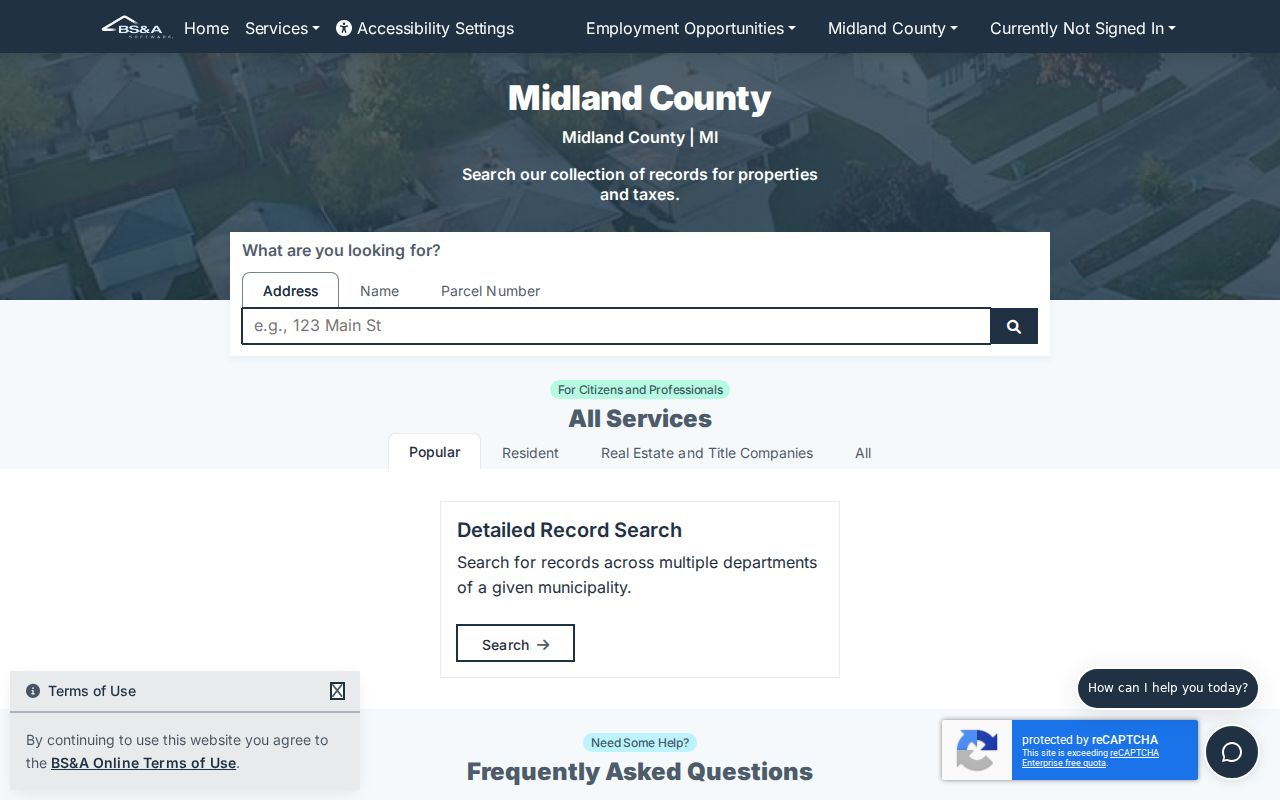
Work those fields down to the parcel key first. Then verify the name against the deed layer before you rely on it. Midland addresses add a wrinkle. The City of Midland keeps its own separate BS&A instance. A city parcel card there shows the current owner, legal description, lot size, class, school district, and both assessed and taxable values. The city issues its own PIN. That number may need to be converted or matched before you can search county property records with it.
Note: A recent transfer may reach the deed index before the assessment system refreshes its owner line.
Where Midland County Property Ownership Appears
Three separate county systems each answer a different piece of the ownership question. Their owner names should only be treated as agreeing once the same PIN or legal description has been matched across them.
| Source | Ownership clue | Currency and access |
|---|---|---|
| BS&A assessment roll | Tax owner and mailing address | Online reference snapshot |
| Register of Deeds | Grantee vested by the newest matching deed | Fidlar index or courthouse vault |
| MiBusiness Registry | Entity identity and filings | Official state search |
| FetchGIS | Owner label tied to the mapped parcel | Online spatial reference |
Ownership and occupancy are two different questions in Midland County. The owner of record may live elsewhere entirely, so check both the mailing address and the situs address before drawing a conclusion about who holds title or who simply occupies the parcel.
The Midland County Deed Is the Confirmation Step
The Midland County Register of Deeds is where a deed becomes official. The office records deeds, land contracts, releases, liens, and plats. Its page routes searchers to Fidlar Tapestry EON and Laredo. Start with the likely owner as grantee. Then match the legal description and recording date against the parcel. Online index and images reach back to 1949. The office itself holds land records from 1855. Staff provide public vault access on weekdays. Older books, microfilm, and indexes cover searches the online tools can't finish.
LLCs, Trusts, and Estates Change the Owner Answer
Not every Midland County deed names a person. Title may vest in an LLC, a trust, an estate, or a personal representative. When it does, the recorded name is the answer. Never swap in a guessed individual. For a company, the Michigan Corporations Division route leads to the MiBusiness Registry, where the full entity name can be matched. A registered agent is only a contact point. That role does not make the agent the owner of record. Probate and death records may clarify an estate transfer, but the deed or court-backed instrument remains the true title link.
FetchGIS Resolves an Unclear Midland County Address
An unclear Midland County address often yields to FetchGIS. The county viewer searches by five-part PIN, owner, street number and name, intersection, or coordinates. Select the shape. Compare its legal or tax description against the assessment and deed results. That cross-check works well for vacant land, parent parcels, units, and recently split tracts. The map also reports acreage, zoning, sales, building characteristics, and tax history. Those fields add useful context. Still, GIS is not an official ownership record.
Fraud Alerts Do Not Monitor Every Ownership Change
Midland County's Register of Deeds runs a Fidlar property-fraud alert. Sign up for the service. It will notify you whenever a matching name shows up in newly recorded documents. It is an early-warning tool, nothing more. The alert cannot stop a filing. It cannot judge a document's validity. Nor can it substitute for your own periodic review of the deed index.
If a suspicious instrument turns up, save its instrument details. Reach the recorder through the official county page. Ignore unsolicited messages demanding payment for a deed copy or title protection.
Mailing Address and Situs Answer Different Questions
A situs and a mailing address answer different questions. The situs is where the parcel physically sits. The mailing address is where the tax office sends its correspondence. The two often diverge. Vacant land can explain the gap. So can an out-of-area owner, an entity that routes mail through an office, or a protected address. Treat neither field as proof that anyone actually lives at the property.
For a legitimate boundary, purchase, easement, or estate matter, use the official mailing route. Keep the message tied to the property itself. Returned mail does not mean the ownership record is wrong. Instead, recheck the latest deed and the date of the assessment snapshot.
When “Who Owns” Produces No Midland County Result
A blank search is rarely a dead end. Usually the query missed, not the record. The mismatch might be a city PIN typed where the county key belongs, an outdated street form, a name variant, or a parent parcel that was split years ago. Restart in FetchGIS using the address or coordinates. Pull the legal description from that result. Then search BS&A by parcel number instead of by owner name.
Parcels inside the City of Midland may need a look at the city BS&A record and city mapping side by side. Coleman keeps no public city address-keyed assessor or permit portal, so its assessor and building contacts serve as the local fallback. Title records stay with the county either way. When the ownership question reaches back decades, go to the Register of Deeds vault before concluding anything.
Record the Midland County Ownership Evidence
A solid owner finding should be reproducible. Record the agency and portal, the access date, the address entered, the parcel number, the exact owner spelling, the legal description, and the newest deed reference. Note one more thing too. Say whether the deed image itself was inspected or only an index entry appeared. That single distinction keeps a portal summary from masquerading as certified proof.
Use separate lines for separate claims. "The roll displays" means one thing. "The index lists" means another. "The recorded instrument states" carries the most weight. If the deed image is not online, inspect it in the vault or order a copy from the Register of Deeds. For a disputed or high-stakes title question, a professional title examination reaches further than any public-record method.
Choose the Right Midland County Ownership Answer
"Property owner" is a loose phrase. Different records answer it differently. The BS&A owner line shows who the tax system ties to a parcel. It reflects the last update. The deed index shows which grantee received an interest in a recorded instrument. FetchGIS links an owner label to a mapped shape. A business filing clarifies an entity's legal identity. None of these substitutes for another.
Match the source to the question. For purchase diligence, start with the tax roll. Finish at the newest matching deed plus any later recorded instruments. A boundary or easement dispute calls for the recorded plat, easement documents, and survey evidence. An estate puzzle may yield to probate and death records explaining why a trust or representative appears. State plainly which source answered which question.
Midland County also works in person when the online trail runs dry. The Register of Deeds vault keeps older books, microfilm, and indexes, open during published weekday hours. Staff will handle an instrument-reference question by phone or email and provide copies under stated procedures. When a county record exists but is not posted, a Michigan FOIA request can go through NextRequest. Include a clear parcel, record type, and date range.
This fallback chain covers deeds predating the online range. It also covers missing images and planning or address files never built into a public search. "Not found online" never means "no record exists." It means the hunt moves to the custodian holding that record type.
What a Midland County Owner Lookup Cannot Tell You
A portal can name the tax owner or recorded grantee. It cannot certify marketable title, reveal every unrecorded interest, or prove who actually lives there. A trust or LLC can also blur how much personal detail shows. Michigan's Address Confidentiality Program shields qualifying people at risk. It works through a designated address and mail forwarding.
Use owner records lawfully. An owner name is not a title search. Use it for property diligence, boundary questions, or history, never to target or harass a person.
- Owner of record
- The party named in the assessment or recording system at a stated time.
- Grantee
- The party receiving the interest in a deed.
- Situs address
- The location of the parcel, which may differ from the owner's mailing address.
- Title
- The legal ownership interest, which a portal summary cannot guarantee.